
If “vibe coding” has been showing up across your LinkedIn feed and product demos lately, it’s not just a buzzword. Vibe coding is the practice of describing software requirements in natural language and letting AI generate the code, while developers shift their focus to reviewing, directing, and refining the output rather than writing syntax line by line. The term was popularized by Andrej Karpathy (formerly of Tesla and OpenAI) in mid-2025, and by 2026 it has moved from a talking point into an actual working method adopted across many development teams.
This article is for decision-makers evaluating development partners or planning a software roadmap: what vibe coding actually is, how it differs from traditional AI-assisted coding, and more importantly, what it means for the quality, cost, and speed of web and software projects in 2026.
What Vibe Coding Actually Means
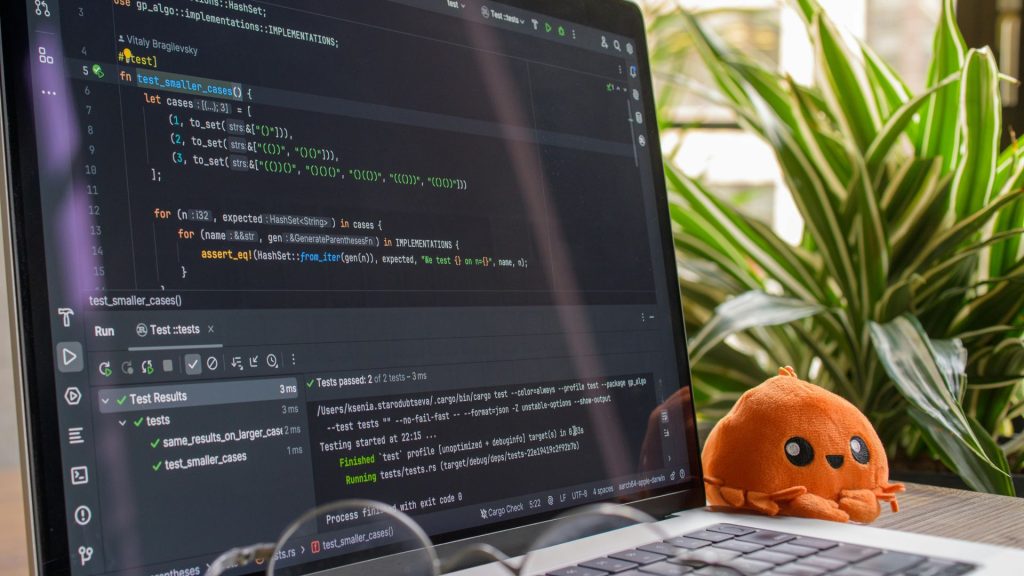
Vibe coding is often confused with “using Copilot to suggest code”, but that’s a different category. With traditional AI-assisted coding, the developer still reads and owns every line. Vibe coding goes further:
- Input is intent, not syntax. You describe what you need, “build a booking page with email confirmation”, in plain language.
- AI generates most or all of the codebase, from UI to business logic to database connections.
- The developer’s role shifts from writing to evaluating, running the result, spotting issues, requesting fixes, rather than debugging line by line.
- Iteration speed increases dramatically. An idea can go from concept to a working build in minutes instead of days.
The key takeaway: vibe coding is strongest for prototypes, MVPs, and internal tools, situations with low risk tolerance for error. For production systems handling customer data, payments, or compliance requirements, experienced engineers still need to own the architecture and review the output, since AI-generated code can run successfully while still being insecure, unoptimized, or difficult to scale.
Why Vibe Coding Is Gaining Traction Right Now
Three factors are converging to make this more than a passing trend:
Models can now handle enough context to be trusted with bigger tasks
Newer AI models process much larger context windows and understand entire codebases rather than isolated snippet, enabling them to take on whole modules instead of single functions.
Agentic coding tools have matured
Platforms now let AI execute commands, self-correct, and validate its own output in iterative loops, removing much of the manual back-and-forth between chat and editor that defined earlier AI-assisted workflows.
Time-to-market pressure keeps increasing
Businesses, especially startups and lean teams, need to validate ideas fast and cheaply. Vibe coding answers that need directly: a working demo for fundraising, customer validation, or internal process testing, without waiting on a full traditional development sprint.

How Vibe Coding Is Reshaping Web Development in 2026
The developer’s role is shifting, not disappearing
The most valuable developers in 2026 aren’t the fastest typists, they’re the ones who can read, review, and architect effectively. Prompt engineering, the ability to evaluate AI-generated code quality, and deep knowledge of security and performance are becoming the real differentiators, partly replacing rote syntax memorization as a core skill.
Delivery speed is changing how projects get scoped and priced
Repetitive work, CRUD operations, UI components, landing pages, can be built significantly faster. That doesn’t automatically translate into proportionally lower project costs: the time saved is typically reinvested into more rigorous testing, security review, and UX optimization, the areas where AI output still requires human oversight.
A new category of risk: “it runs” doesn’t mean “it’s production-ready”
This matters most for businesses evaluating outsourcing or development partners in 2026. Unsupervised vibe-coded output commonly carries hidden risks: security gaps from missed edge cases, architecture that doesn’t scale as the product grows, and technical debt that accumulates silently. An experienced development team knows where vibe coding fits, ideation and MVP stages, and where strict review and engineering discipline are non-negotiable, namely production environments.
The gap between “having an idea” and “having a real product” has narrowed, but not closed
Vibe coding lets almost anyone produce a working demo. Getting from demo to a stable, secure, user-ready product still requires a team that understands the business logic, real-world UX, and infrastructure behind it. That’s exactly where a professional development partner adds value beyond what a standalone AI tool can deliver.
How Businesses Should Approach This Trend
- Use vibe coding to validate ideas fast, not to ship production systems solo, unless you have the technical depth to review the output properly.
- Look for a partner who combines AI-driven speed with disciplined human oversight, this is the real way to control cost without compromising long-term system stability.
- Prioritize partners with clear engineering processes (architecture review, security practices, QA) regardless of how much AI tooling they use internally, the deliverable that matters is a stable, secure product aligned with your business goals, not the method used to get there.
FAQ
How is vibe coding different from using ChatGPT or Copilot to write code?
The difference is in how much control shifts to AI. Traditional AI-assisted coding still has the developer writing and owning every line with AI suggestions. Vibe coding lets AI generate and self-correct entire blocks of logic, with humans evaluating only the final result.
Will vibe coding replace developers?
No. It’s changing day-to-day developer work — less manual coding, more review and direction — but production-grade projects still require experienced engineers to manage quality and risk.
Should a small business build its own product using vibe coding to cut costs?
It works well for simple landing pages or early-stage idea validation. For anything that needs to run long-term, handle customer data, or integrate with other systems, a technical team should oversee the build to avoid security risks and costly fixes down the line.
Webie Vietnam delivers dedicated development teams and custom software solutions for businesses in Vietnam and around the world, regardless of how fast the underlying tooling evolves. Learn more about our development services →
Get in touch: huyen.dang@webieglobal.com