
Over the past few years, the Influencer landscape has evolved from a nascent trend into a formidable force within the marketing industry. As of 2024, the sector is estimated to be worth approximately $24 billion, with projections indicating it will reach $32.5 billion by the end of 2025 (according to the Influencer Marketing Benchmark Report 2025)
When Neuroscience Decodes the True Power of Influencers
Many marketers today remain fixated on vanity metrics: likes, shares, or comments. However, neuroscience reveals that these indicators are merely the tip of the iceberg. For instance, a “like” may indicate that a viewer responded positively to content deeming it beautiful, interesting, or amusing but it fails to identify the specific type of emotion (humor, empathy, warmth) or the intensity of that feeling. Meanwhile, intense positive emotions are deeply correlated with advertising efficacy. This is because emotions facilitate memory formation, and memories significantly influence future purchasing decisions.
When consuming content from an Influencer, our brains undergo a fascinating process. It is not merely about seeing; it is about feeling. Positive emotions, resonance, and a sense of empathy are the keys to forming long-term memories. When you feel joy or trust toward an influencer, that sentiment is encoded in your brain. Consequently, when you stand before a retail shelf, you are predisposed to favor the brand that the influencer mentioned, even if you cannot recall the specific details of the advertisement.
Why Do Influencers Exert Such Power Over Shoppers?
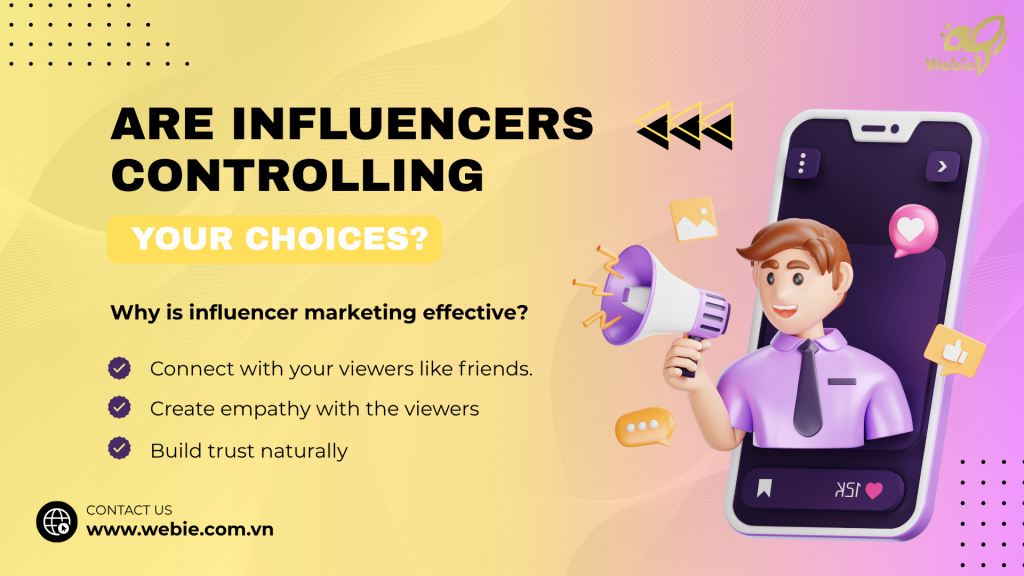
If traditional TV advertising is akin to a voice from a stranger, content from an influencer is like advice from a friend.
- Empathy: When we follow a Micro-influencer or a Macro-influencer, we often identify shared lifestyle traits or personal values. This mechanism creates an implicit connection within the brain.
- The Benefits of Influencer Marketing: Beyond standard promotion, influencers imbue brands with a sense of soul. Research indicates that advertising delivered by influencers generates emotions many times stronger than traditional media channels. This leads to higher consumer recall and facilitates more fluid decision-making.
Micro-influencer
Micro-influencer typically boast a following of 10,000 to 100,000, acting like the trusted confidants of their communities. Because their audience is not excessively large, they have the bandwidth to interact, responding to individual comments or messages. Consequently, the bond of trust between them and their viewers is exceptionally durable. The strength of a Micro-influencer lies in this two-way interaction. When they recommend a product, the consumer’s brain having been reached by someone they trust and identify with lowers its psychological defense barriers. This sincerity becomes a critical catalyst, prompting customers to make purchasing decisions proactively and voluntarily, rather than being driven by top-down, impersonal corporate messaging.
Macro-influencer
Macro-influencer, with followings ranging from 100,000 to over 500,000, function as trendsetters. They possess not only massive personal appeal but also the capability to broadcast messages with remarkable speed. Notable is the professionalism with which they integrate brand messaging. Despite reaching hundreds of thousands of people, these Macro-influencer figures know how to maintain their personal edge, ensuring the message remains relatable to the viewer. When executed correctly, their influence extends beyond mere awareness to creating market credibility, making the product a top-of-mind choice when the consumer faces a purchase decision.
The “Priming” Effect: How Influencers Steer Buying Decisions
The priming effect is a psychological phenomenon in which prior exposure to information influences how people perceive or react to subsequent information.
Some studies show that before the effects of the baiting effect, viewers often react quite negatively to advertisements on TV, YouTube, and Facebook. However, after watching content from influencers, their reactions become more positive.
This means that influencers can transform the brand experience from negative to positive. Before influencers, viewers were often annoyed by ads interrupting their viewing experience. But if they had seen the influencer’s post in the same campaign before, they were more likely to accept and pay attention to the ad.
This is a huge shift in how viewers react to advertising, and a remarkable result for influencer marketing.
Frequently Asked Questions
- Is Influencer Marketing actually more effective than traditional advertising?
Yes, in many cases. Due to its ability to evoke emotions and build personal trust, Influencer Marketing often leads to longer brand recall and smoother decision-making compared to traditional, distant advertising methods.
- How can I tell if an influencer is “steering” my purchasing decision?
You can ask yourself: “Do I actually need this product, or is it simply because I recognize the brand and feel a positive connection with the person recommending it?” If the motivation is driven more by emotion than by actual necessity, you are likely being influenced.
- Should I trust a Micro-influencer or a Macro-influencer more?
This depends on your specific goals. Micro-influencer profiles are typically more trustworthy and relatable, while Macro-influencer profiles offer greater reach and trend-setting power. The most important factors remain relevance and the authenticity of the content they share.
Hotline: 0969 838 467 – Huyen DANG
Email: huyen.dang@webie.com.vn
Website: webie.com.vn