

The need for international expansion is growing rapidly. Many often think that simply installing an automated translation plugin is enough. In reality, a multilingual website acts as an online brand ambassador, if it isn’t polished, customers will leave within seconds. Let’s walk through 5 key points to consider during the website design phase to optimize your customer experience.
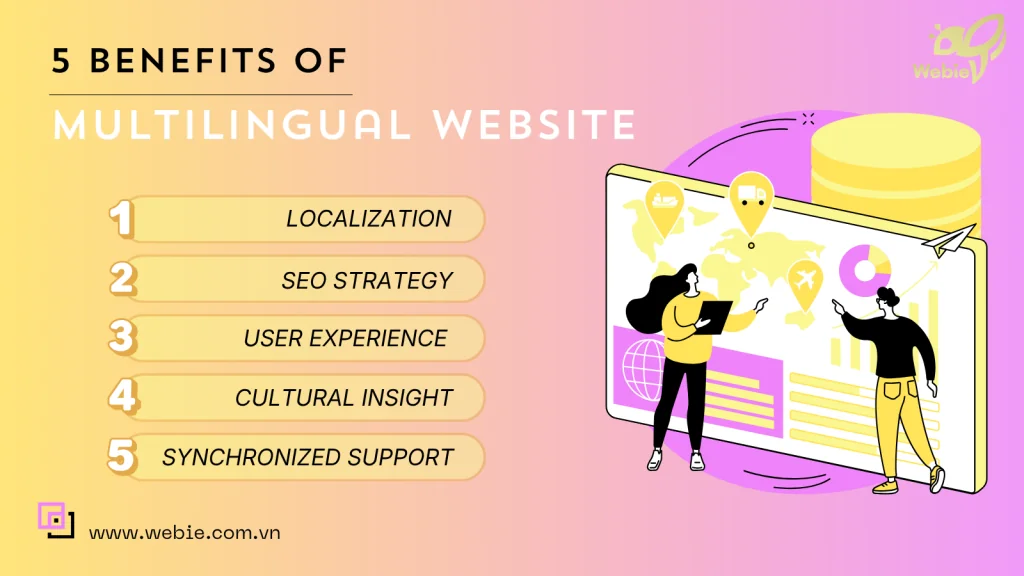
Don’t over-rely on automated translation for your multilingual website
Many people rely entirely on computers for translation to save time and money. However, machine translation can be naive; it often misses cultural context or local slang. A poorly translated sentence can seriously damage your brand’s credibility. Therefore, nothing beats translating content yourself or hiring an experienced translation service. It makes your website look professional and free of awkward phrasing in other languages. While you can use AI as a starting point, human review is essential. If you need a professional solution, reputable web services providers like Webie Vietnam will offer a more methodical translation roadmap than just using a simple tool.
Don’t forget SEO when designing your website
The core goal of developing a multilingual website is not just to display multiple languages, but to attract the right customers and optimize their satisfaction. To achieve this, a professional website development service must be backed by a robust multilingual SEO strategy. Instead of just translating text, you need attention to detail: optimizing URL structures, researching long-tail keywords for each local market, and standardizing meta tags and image alt tags. Integrating support tools and dedicated plugins into your website management ensures that your site is not only beautiful but also friendly to search engines in every country. If you are looking for a partner to accompany you, Webie Vietnam is ready to consult on optimal solutions to ensure your website design truly breaks through on the global stage.
Failing to Integrate user-friendly language options
Holding data isn’t enough you need to know how to turn it into action. Start by integrating analytics tools to accurately track user behavior on your website. Instead of spreading your budget thin, focus resources on website design in the languages that yield the highest conversion rates. If you are considering market expansion, choosing the right language is the smartest step to optimize your budget. At Webie Vietnam, we advise clients not to chase quantity but to prioritize high-quality localized content. Whether it is technical support or strategic consulting in website development services, our team is here to ensure that every added language provides real value, best supporting your long-term website management.
Ignoring localization techniques
Localization is the process of adjusting messages to fit the culture and habits of users in a specific region. For effective website design, you need a deep understanding of local terminology and how users in that region search on Google. Take a simple example: English usage in the UK and the US differs vastly. If you copy content from one market to another without localization, customers will feel alienated immediately. This is where professional web services prove their worth. At Webie Vietnam, we prioritize tailoring content to local insights, ensuring every website is not only understandable but also feels familiar and trustworthy.
Placing language options in hard-to-find spots
The refinement of website design often lies in the smallest details. Don’t make customers struggle to find language settings, as they will leave if they can’t find them. A clear language menu, placed in a prime location in the header, is the best way to optimize customer experience. However, language selection is just the first step. During website management, ensure that customer queries in any language are addressed promptly. Don’t forget to integrate customer support channels like FAQs, which should also be localized. This is how professional website development services make a difference. When customers feel understood, they are more likely to trust and stick with your multilingual website.
Frequently Asked Questions
1. Is using automated translation tools harmful to SEO?
Yes, if overused. Google may consider automated translation content as low quality. For good SEO, combine automated translation with human review and editing.
2. Where should I place the language switcher button on my website?
The best position is the top-right corner of the header. Ensure it is clearly visible and easy to interact with on both desktop and mobile so users don’t face difficulties.
3. Why is localization more important than just translation?
Translation only changes the language, while localization helps your site blend into the local culture. This includes adjusting images, currency units, and writing styles to be the most familiar and reliable for customers in that country.
👉 Don’t let language barriers slow down your business. Contact us today to receive a free consultation from the experts at Webie Vietnam.
Hotline: 0969 838 467 – Huyen DANG
Email: huyen.dang@webie.com.vn
Website: webie.com.vn

