
Your buyers decide whether to trust your company long before they ever speak to your sales team. For a small or medium business (SME), the fastest way to earn that trust is not a bigger logo or a glossier website. It is a visible founder. Founder branding means putting the owner’s name, face and point of view in front of the market, so the person behind the business becomes a reason to choose it.
This guide explains what founder branding really is, why it works especially well for SMEs, a system to build it without burning out, and the one risk most people never mention.
What founder branding means for an SME (and what it is not)
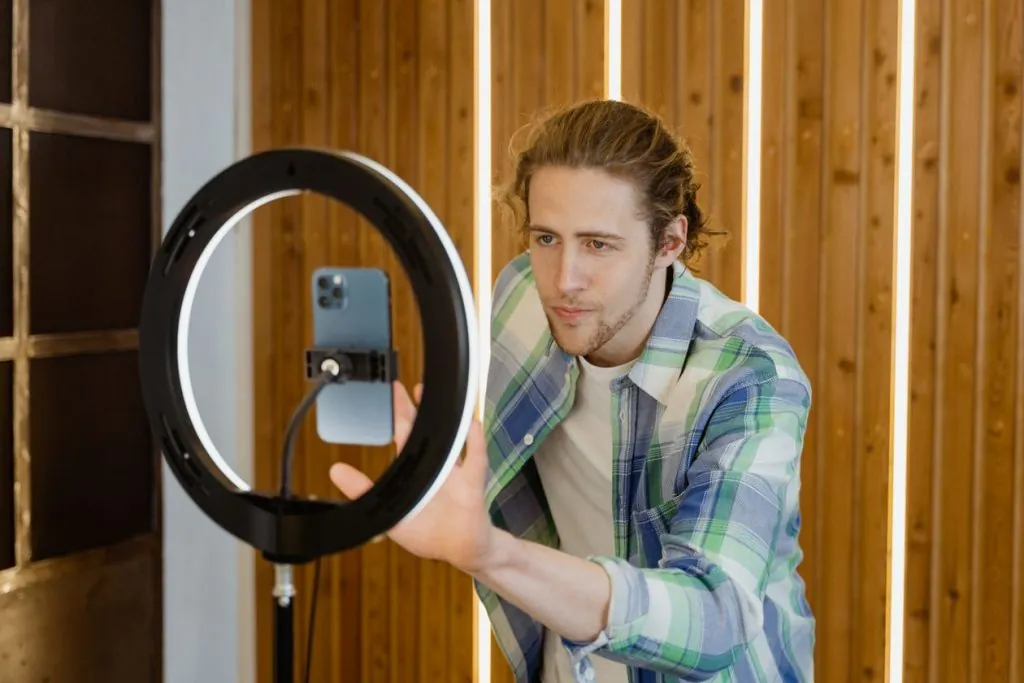
Founder branding is the deliberate work of building a public reputation for the person who runs the business, then connecting that reputation to the company. It is the owner sharing how they think, what they have learned and where the industry is heading, under their own name.
It is easy to confuse with things it is not, so a quick boundary helps:
- It is not posting selfies or lifestyle content. It is sharing useful judgment about your field.
- It is not replacing the company brand. It feeds the company brand and gives it a human anchor.
- It is not only for charismatic extroverts. Consistency and honesty beat charisma every time.
Why buyers follow people, not logos
People trust people. The 2025 Edelman and LinkedIn B2B Thought Leadership Impact Report found that 73% of decision makers say a company’s thought leadership is one of the best ways to judge the caliber of thinking they will actually get as a client, and 64% trust that kind of content more than marketing materials and product sheets when sizing up a vendor. During a formal buying process, 79% said they are more likely to champion a company that consistently publishes strong thought leadership.

That content performs best when a real person carries it. RevBoss’s 2026 founder led marketing benchmarks, drawn from 33 LinkedIn profiles and more than 1,200 posts, found founder accounts earned about 2.1 times the median impressions of company pages running the same programs. Separately, 82% of people say they are more likely to trust a company when its senior executives are active on social media, and executives surveyed attribute roughly 44% of a company’s market value to the reputation of its CEO (Entrepreneur and Weber Shandwick, cited by DSMN8). The face is not a vanity layer. It is the trust layer.
Why founder branding is a bigger lever for SMEs than for corporations
Here is the part that matters most for a smaller company. In that same Edelman and LinkedIn study, 53% of decision makers agreed that when thought leadership is high quality, the vendor’s brand recognition matters less. For an SME competing against bigger, better known names, that is the whole game. You cannot outspend a corporation on brand awareness, but a founder who shows sharper thinking can win the deal anyway.
The opportunity is wide open because almost nobody does it well. Only about 1% of LinkedIn users post in a given week (Buffer, cited by DSMN8), which means the field in front of your buyers is mostly empty. In Vietnam, where SME buyers lean heavily on referral, reputation and relationships, a founder who is consistently visible and genuinely useful stands out fast, because most competitors are still hiding behind a company page.
At Webie I started with myself: posting consistently under my own name on our website, Meta and LinkedIn, about the exact work I know best. After about three to four weeks I could see searches for our services tied to my personal name climb, and the first leads reached out because they had read my articles, not just because they found a company page. Credibility and traffic rose together. My biggest early mistake was not optimizing for my own expert name as a keyword and not linking back to the pieces I had written, so the effort leaked away. In my view a founder should show up as the company’s representative and expert voice, while the company brand stays the proof of the service and the trust behind it.
Huyen Dang, Managing Director, Webie Vietnam
A founder brand system you can actually keep up
Most founders quit after two weeks because they treat this as a campaign instead of a habit. A simple, repeatable system fixes that.
Pick one platform where your buyers already spend time
Do not try to be everywhere. For B2B and professional services in Vietnam, that is usually LinkedIn plus Facebook. For retail, wellness or F&B, it may be Facebook plus TikTok. Choose the one place your actual buyers scroll, and go deep there before adding a second.
Choose three or four content pillars
Pillars are the handful of themes you will return to again and again, so you never stare at a blank screen. Pick topics where you have real firsthand experience: lessons from running the business, a strong opinion about your industry, behind the scenes of how you work, and answers to the questions customers always ask.
Set a rhythm, not a sprint
Two useful posts a week, every week, beats ten posts in one burst and then silence. RevBoss found accounts that posted above the median cadence of about 1.7 posts per week grew their following roughly twice as fast. Pace is a feature, not a limitation.
Turn reach into replies
Attention only pays when it becomes a conversation. End posts with a question, reply to every comment, and move warm commenters into direct messages. The goal is not applause. It is a pipeline of people who already trust you before the first call.
Founder content starter kit
If you need somewhere to begin this week, these four pillars cover most of what an SME owner can speak to with authority.
| Content pillar | What it answers for the buyer | A post idea to start |
|---|---|---|
| Hard won lessons | Can this person actually run a business like mine? | A mistake you made and the exact fix |
| Industry point of view | Does this person see further than my current vendor? | One thing your industry gets wrong |
| Proof in practice | Do they get results for people like me? | A before and after story, no client names needed |
| Answering real questions | Will they understand my specific problem? | The question customers ask you most, answered in full |
The honest risk: do not tie the whole company to one face
Founder branding has a real downside that few people admit. If every lead, every deal and all the trust flow through one person, the business becomes fragile. If that founder gets busy, steps back or leaves, the pipeline can collapse with them. Buyers may also start to feel they are hiring the founder personally, which does not scale.
The fix is to treat the founder brand as a bridge, not a destination. Use the founder’s visibility to pull attention in, then route that trust toward the company brand, the team and the systems. Have other team members publish too. Turn the founder’s best ideas into company content. The aim is a business that a founder’s voice helped build, not one that falls apart the moment that voice goes quiet.
Decision framework: should the founder be the brand right now?
Founder branding is not equally urgent for every business. Use these signals to decide how hard to lean in this quarter.
| Signal | Lean in on founder branding | Share the stage with the company brand |
|---|---|---|
| Sales model | Trust and relationships close deals | Transactions close with little human contact |
| Market position | You are smaller than better known rivals | You already lead your category on awareness |
| Founder availability | The owner can commit a few hours a week | The owner has no time and no willing proxy |
| Growth stage | Early, building reputation from zero | Mature, reducing dependence on any one person |
Where Webie fits
Building a founder brand is simple to understand and hard to sustain, which is exactly where a partner helps. At Webie we help SME owners turn scattered expertise into a steady content engine: picking pillars, drafting posts in your voice, and connecting that attention to a website and funnel that actually converts. If you want a founder brand that feeds real pipeline rather than just likes, see our digital marketing and content services or talk to our team directly. Call +84 969 838 467 or email huyen.dang@webie.com.vn.
Frequently asked questions
How is founder branding different from personal branding?
Personal branding is about building any individual’s reputation, for any goal, including a career move. Founder branding is narrower and more strategic: it deliberately links the owner’s reputation to a specific company, so the trust the founder earns flows to the business and its pipeline.
I am an introvert and I hate self promotion. Can this still work?
Yes. The best founder content is useful, not loud. You are not performing, you are teaching what you already know. Quiet consistency, honest lessons and genuine answers to customer questions outperform showy self promotion almost every time.
How long before founder branding produces leads?
Expect a few months of steady posting before momentum shows, not a few days. Early on you are building recognition and trust, which compound slowly and then quickly. Most owners who stay consistent for 3 to 6 months start to see warmer inbound conversations and shorter sales cycles.