

Trong những năm gần đây, AI trong y tế đang trở thành xu hướng nổi bật trong quá trình chuyển đổi số toàn cầu. Không chỉ hỗ trợ tối ưu quy trình khám chữa bệnh, công nghệ AI trong y tế còn góp phần nâng cao chất lượng chăm sóc sức khỏe, giảm tải áp lực cho đội ngũ y bác sĩ và xây dựng hệ thống vận hành hiệu quả hơn.
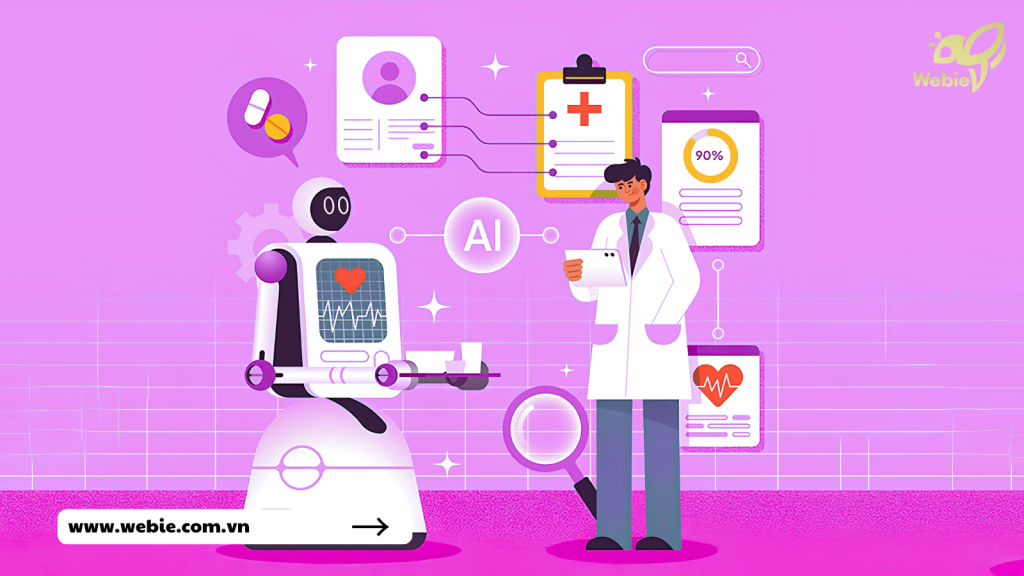
What is AI in healthcare?
AI in healthcare refers to the application of artificial intelligence AI to activities related to medical care, such as disease diagnosis, medical data analysis, medical record management, and supporting health consultations for patients. This technology allows machines to learn from data, automatically process information, and make highly accurate recommendations.
Today, AI technology in healthcare is no longer a distant concept but has been deployed in many countries around the world. These AI systems can assist doctors in reading X-rays, detecting pathological signs from laboratory data, or predicting the risk of future diseases.
Prominent applications of AI in the healthcare industry today
AI-Assisted diagnosis and disease detection
One of the most common applications of AI in the healthcare industry is assisting with disease diagnosis. Advanced AI systems can analyze CT, MRI, or X-ray images to detect abnormalities with high speed and precision.
Thanks to its ability to learn from big data, AI helps doctors minimize errors during result interpretation and supports early disease detection. This is particularly crucial for dangerous pathologies such as cancer, cardiovascular disease, or stroke.
Healthcare consultation chatbot
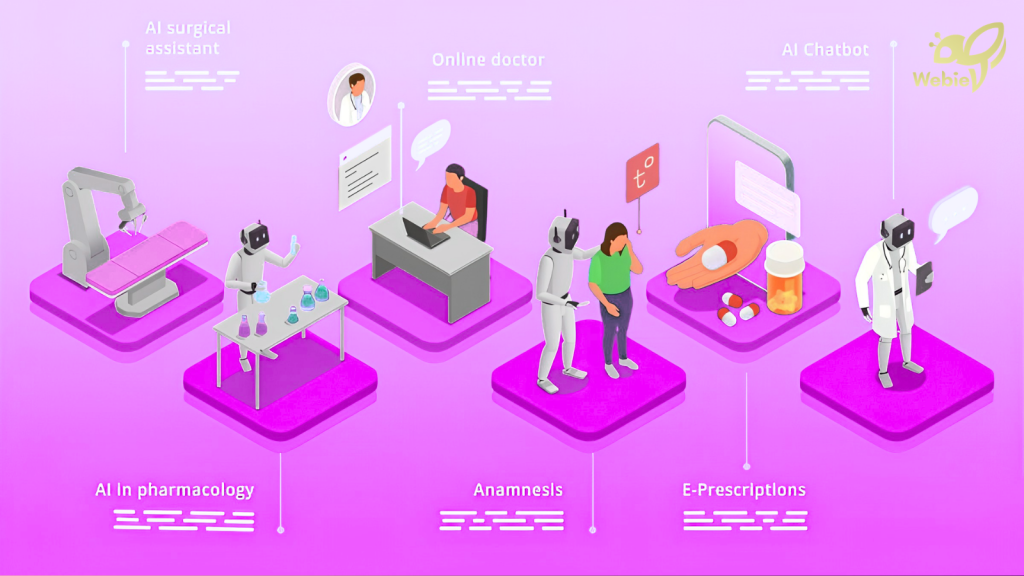
Currently, many hospitals and clinics have deployed a healthcare consultation chatbot to support patients 24/7. The chatbot can answer basic questions, guide patients through booking appointments, or provide primary healthcare information.
Implementing a chatbot not only reduces the workload for the customer service department but also enhances the user experience. This is considered an important step forward in building AI systems tailored for the medical field.
AI CRM in patient management
An AI CRM is an effective solution that helps medical facilities manage patient information more efficiently. This system can store medical history, analyze user behavior, and provide appropriate care recommendations.
Through an AI CRM, hospitals can personalize the patient experience, increase engagement, and improve service quality. This is also a growing trend that many organizations in Vietnam healthcare are closely interested in.
AI marketing in the medical sector
Beyond operational support, AI marketing helps hospitals and clinics enhance their communication efficiency. AI technology can analyze customer behavior, optimize advertising content, and target the exact audience demographics.
In an increasingly competitive environment, applying AI marketing allows healthcare providers to build more effective communication strategies while boosting brand awareness on digital platforms.
Benefits of AI technology in healthcare
The application of AI technology in healthcare brings tangible benefits to hospitals, doctors, and patients alike.
- Enhanced Accuracy: First, AI increases accuracy in diagnosis and treatment. AI systems can process massive amounts of data in a short time, helping doctors make faster and more effective decisions.
- Optimized Workflows: Second, AI optimizes hospital operations. From managing medical records and scheduling appointments to customer care support, many tasks that previously required manual effort are now automated.
- Improved Patient Experience: Furthermore, AI contributes to elevating the patient experience. Solutions like a healthcare consultation chatbot or AI-powered customer service systems help patients access information faster, reducing waiting times and improving overall service quality.
More importantly, AI in healthcare opens up opportunities to build a more sustainable, modern, and flexible healthcare system for the future.
Growth potential of AI in Vietnam healthcare
Vietnam healthcare is entering a phase of powerful digital transformation with the active participation of many technology enterprises and major medical institutions. Among these, AI is considered the core technology to improve service quality and optimize operations.
Many hospitals in Vietnam have begun applying AI systems in diagnostic imaging, medical record management, and customer support. At the same time, tech startups are developing various solutions related to healthcare consultation chatbot platforms, AI CRM systems, and online medical examination platforms.
However, for AI in healthcare to grow sustainably, the medical sector still needs to address multiple challenges, such as technological infrastructure, data security, and highly specialized human resources.
Challenges in implementing AI in healthcare
Despite bringing numerous benefits, deploying AI technology in healthcare still faces significant difficulties.
Data Security Challenge: One of the biggest hurdles is the security of patient data. Medical data consists of highly sensitive information, requiring strict protection systems to prevent leaks or unauthorized exploitation.
In addition, the investment cost for AI systems remains a barrier for many medical facilities. Implementing AI demands modern technological infrastructure, high-quality data, and a highly skilled workforce.
Finally, the ability to synchronize data between different hospitals and existing management systems is still limited. This directly impacts the real-world efficiency of deploying AI in healthcare.
Hotline: 0969 838 467 – Huyen DANG
Email: huyen.dang@webie.com.vn
Website: webie.com.vn